The trigger
{{d.trigger}}
The call
{{d.call}}
"I think you missed my turn."
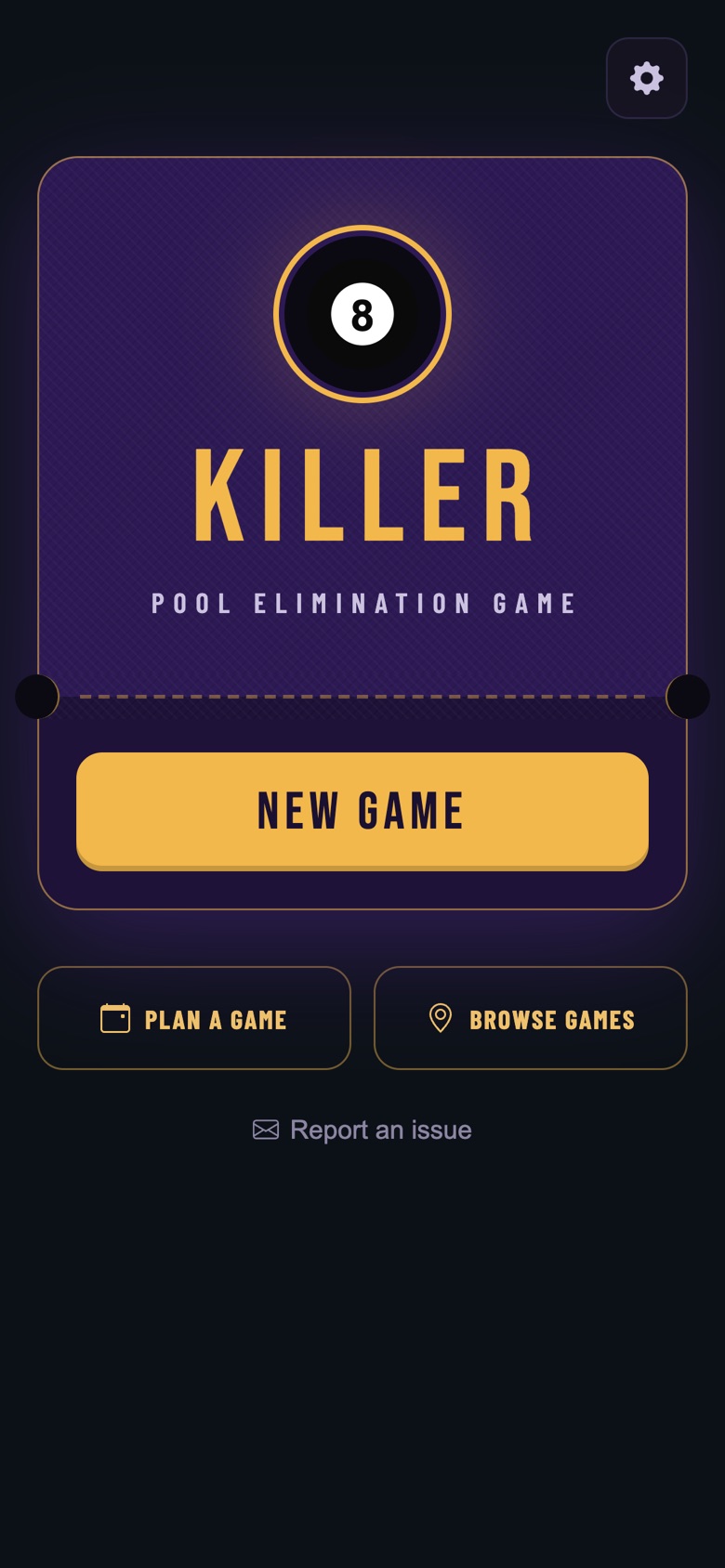
Killer is made for a crowd: many people in one game at the same time, so it's purely social. Many pool halls run Killer Nights to bring people in on slow nights. Classic Killer runs on paper and playing cards.
Cards get forgotten, missed or lost. Turns get argued about. And one organizer carries all of it: the board, the cards, the pot, and every "wait, whose turn is it?"
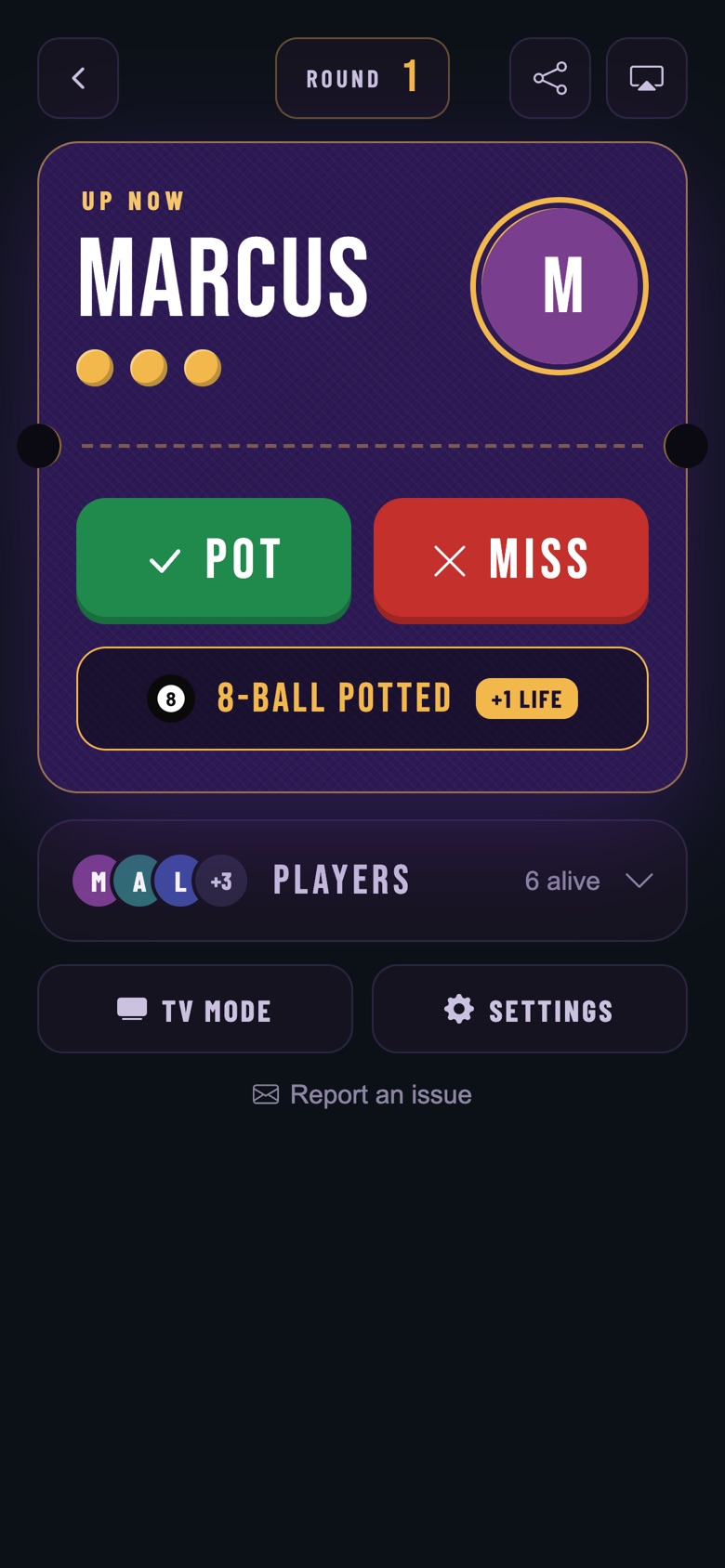
One game, set up for either crowd: lives, house rules, entry fee and draw cards change per group, so the same app runs a money night and a casual night.
So it's a setting, not a rule: Public turn info lets the organizer hide or show who's next for each game.
I initiated the product, defined its functionality, designed the user experience and interface, and made the key product decisions throughout development. I used AI-assisted development to build, test and iterate on the application, validating decisions in a real pool-hall environment.
I defined what to build, evaluated alternatives, reviewed AI-generated code changes and tested the application in real-world conditions. The code itself was generated by Claude Code, not written by hand. This let me iterate quickly while remaining responsible for the product's functionality and user experience.
The organizer casts the game to the pool hall TV with Chromecast. It shows who's up, their lives, the round, how many players are left and the prize pot. With Public turn info on, it also shows who's next. A QR code lets anyone follow on their own phone.
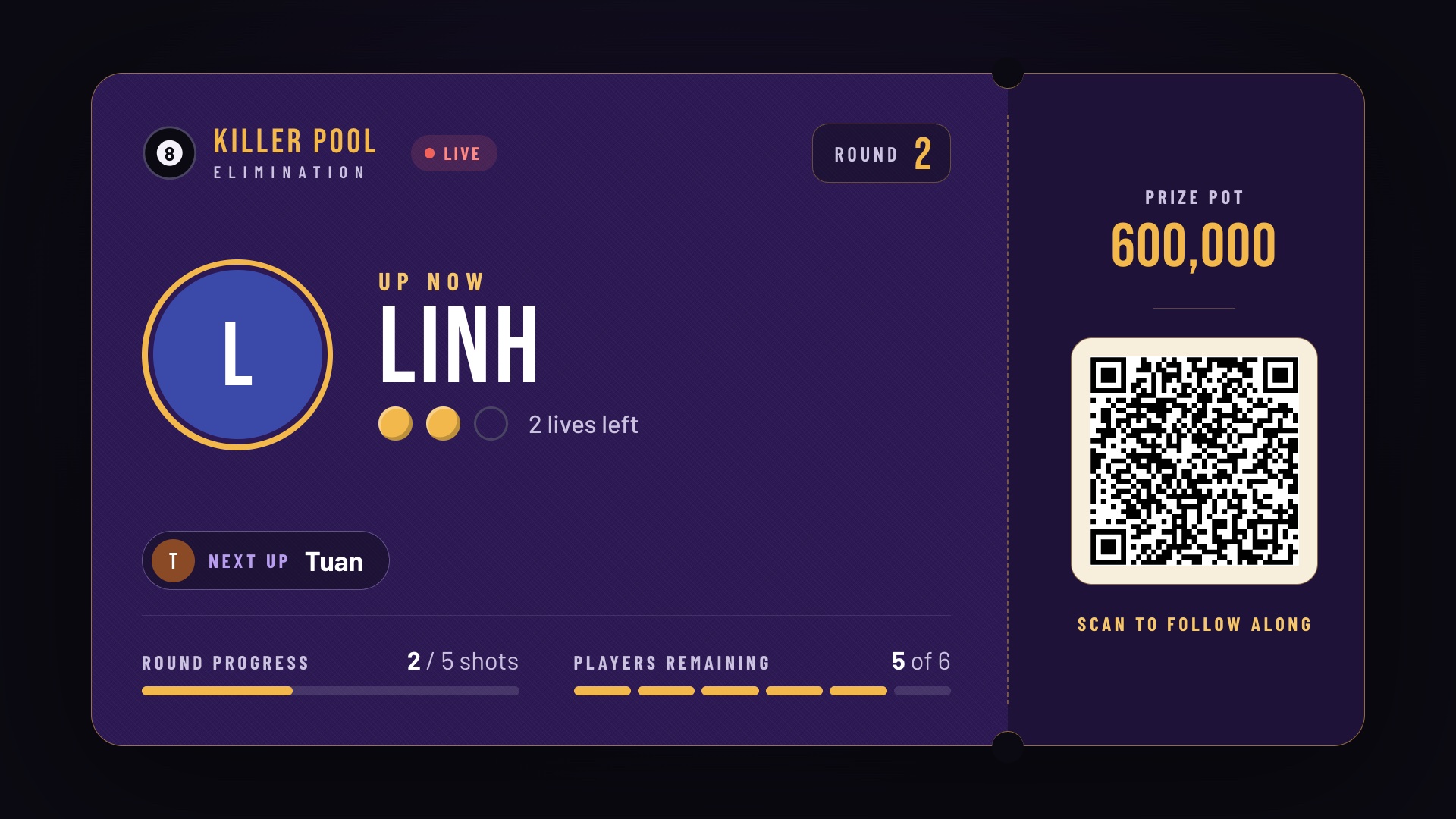 Chromecast receiver, 1920 × 1080, Public turn info on
{{d.trigger}}
{{d.call}}
Four unrelated features bundled behind one price.
Next step before building the Venue plan: talk to five pool hall owners in Da Nang. Two or more yes answers, and it gets built.